Chapter 3: Gate
Some doors open only once in a lifetime.
- 玄心 (Fuheng Wu)
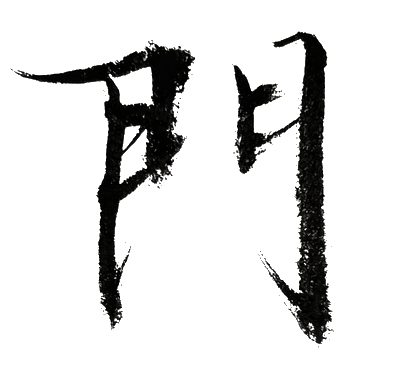
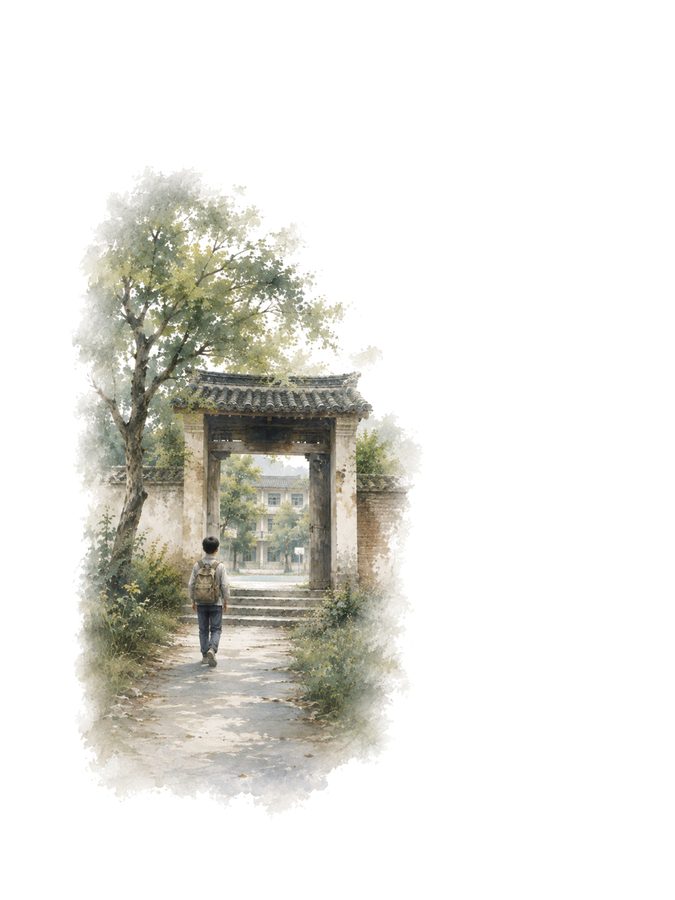
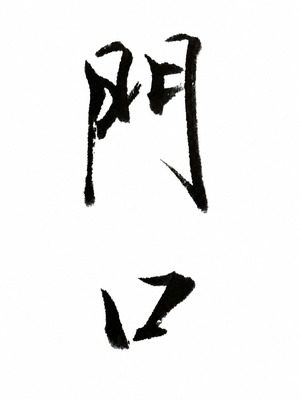
Doorway
In fourth grade,
I got my first love letter.
She was a classmate of mine.
I don't remember her surname anymore.
Her house was near the mountain pass on the road to school.
One day we were walking home together,
and she gave me a plastic pencil case.
She said she wanted to come see my house on Sunday,
and told me to wait for her in the doorway.
I went home,
closed the door,
and opened the case.
Inside were two new pencils and an eraser,
and right at the bottom,
a note saying she wanted to be friends.
I thought that was strange.
We were already friends.
I reported the whole thing to my parents.
Sunday she really did come.
She walked over by herself.
I don't remember what we talked about.
My mother poached her two eggs, with plenty of sugar.
When she went home that afternoon,
my mother, worried she'd get lost,
walked her a long way.
My father kept asking me what happened.
I was confused too.
I didn't know how to answer.
I was famous where we lived
for how my father beat me.
There was an ancestral altar in the main room,
and he'd make me kneel there for hours.
After that he'd make me stand in the doorway and reflect.
When he was angrier,
he'd hang me from the rafters and beat me.
My mother couldn't stop him,
so she swapped the thick stick in his hand
for a long, thin, flexible switch.
In the local dialect, it was called a huangjing switch.
The rest of the time,
I used the same kind of branch to make slingshots for hunting birds.
This one stung the skin,
not the flesh,
and never touched the bone.
I treated it like it was scratching an itch.
I built up plenty of experience getting beaten.
I didn't give in easily.
But later,
he'd also lift me by the feet
and shove my head into the water jar,
until I said, "I know I was wrong."
Every time I wailed,
birds in the valley would scatter into the air.
At school,
we used to compare whose beatings at home were worst.
Nobody really competed with me for first place on that one.
Strangely enough,
after that girl came to visit,
my father seemed to stop beating me so much.
Then I started junior high.
In year one I was still half lost.
I remember the teacher called me up to read Zhu Ziqing's Spring7 aloud,
and a girl surnamed Zhou kept laughing at me.
Perhaps because my Sichuan accent didn't quite belong.
There was another classmate,
a distant relative of mine,
whose grades suddenly improved too.
He became third in the class.
I realized that the people around me were quietly catching up.
Beyond that I can't remember what happened that year.
By year two
the classmate who always came first transferred away.
Puberty hit and I started growing.
Suddenly I felt
things I took for granted were not so certain anymore.
In those days
Michael Jordan was everywhere.
I learned to play basketball and practically lived on the court.
Video games, music and movies from Hong Kong and Taiwan,
the Four Heavenly Kings11—
it all came rushing in at once.
After school I didn't go straight home.
I always headed for the arcade door.
I got hooked on San Guo Zhi5.
As a kid I'd read Romance of the Three Kingdoms6 again and again.
Now I could finally control the characters myself.
All those years of pocket money turned into game tokens.
Once while playing my palms bled,
and I didn't notice at all
until the arcade owner pointed it out—
the blood was dripping onto the floor.
Back then,
we had already begun to mimic the characters in movies.
Hair parted down the middle,
mousse worked in.
Belts worn two and a half inches below the navel,
with something—ideally—tucked at the waist.
If we had no axe or knife, we'd settle for a stick
or even a branch.
When we walked,
we'd hitch our shirts up to show off half-formed abs.
Only many years later
did I realize those blood-stirring words and gestures
came from hit movies and popular songs.
I remember going with other students to another school to watch them fight.
They wanted to replay those brawl scenes from the movies for real.
Another time,
several bad guys from another town came to make trouble at our school.
The PE teacher kicked one flying.
He rolled through the wheat field.
We jumped and clapped and cheered.
The PE teacher became a hero in everyone's eyes.
Back then,
maybe because my body was changing,
my skin felt itchy all over.
If I didn't shadowbox or spar a little each day
something felt wrong.
Later I realized even gaming and playing tough took talent.
My talent wasn't there.
I still preferred to write and draw.
Back in second grade of elementary school
the girls in class were talking about which boys looked handsome.
The same girl surnamed Zhou said I ranked second
because I was very fair and delicate,
like my handwriting.
So that was how they judged people.
But when I was small,
my handwriting was indeed fairly neat.
I don't know which day it started
but the classmate who was always first and I
both fell in love with a kind of squared-off script.
Only later did I learn it was called Fang Song.10
Calligraphy—
almost no one taught me.
My father said Teacher Wang had a good brush hand.
He came once and coached me for half a day.
But only once.
Mostly, he preferred talking to us
about Mike Tyson and Bruce Lee.
Teacher Tang's handwriting, I'd heard, was excellent.
Once
I saw him writing on a cigarette pack—
like something printed
yet with a bit of looseness and flow.
After he threw the pack away,
I picked it up, studied it over and over.
It seemed miraculous.
My handwriting was neat, but too mechanical.
I wondered whether I could ever be like that.
He said I could practice with Pang Zhonghua9's copybooks.
I borrowed one from somebody.
Later I returned it.
I had to buy another in Tuqiao14.
Pang Zhonghua's copies were sold out.
This one was by someone else.
I don't remember the name.
The style was nothing like Pang Zhonghua's.
Only then did I realize that flow is a kind of beauty
and plainness is too.
Later,
I started looking on my own, thinking it through.
I learned clerical script and running script too.
I liked switching freely between different styles.
Sometimes I'd imitate someone else's hand so well that they couldn't tell.
I also liked to look at Chairman Mao's cursive
but I didn't dare imitate it.
In class,
I would sketch the outlines of brush-written characters in pencil,
then shade them
until the characters seemed to stand up.
At first,
I traced the copybook.
Later I found it was too slow.
I preferred to stare at the characters,
run through in my mind how to write them,
then commit them to memory.
If I traced too much,
what I wrote looked just like someone else's—
I didn't like that.
All of this was my own hobby,
my own amusement.
I always assumed everyone else would do the same.
In fifth grade
rumors of an earthquake flew through our area.
My father wasn't reassured
and sent me to my seventh uncle's in the city to "escape the earthquake."
Looking back,
it seems a little absurd.
But at the time,
that's how things happened.
My cousin and I studied together,
played together.
One day, looking through my pencil case,
Seventh Aunt saw a character "Qin."
She said that character was well written—
the strokes had real brush edge.
In front of a lot of people she praised me.
The others said so too.
At the time I didn't even know
what "brush edge" was supposed to mean.
I only felt that writing was supposed to be like that.
I always thought that was natural.
Maybe the adults were just encouraging the kids.
But it was the first time
so many people seriously said my handwriting was good.
In sixth grade
Jianyang held a county-wide calligraphy and painting exhibition.
I submitted an entry out of curiosity.
I was selected upward, level by level—
from the township to the town,
then the district,
then the county.
I thought,
coming out of a village,
with no formal training,
I probably didn't have much chance.
But somehow my piece made the final show
and was hung in the county hall.
That exhibition certificate—
I've kept it to this day.
Later Jianyang County became Jianyang City,
but the certificate still carries the old name.
Even though my calligraphy was on display,
my parents didn't care much.
My father said
you couldn't make a living from calligraphy,
but you could from drawing.
I'd always liked drawing.
Mostly cartoons—
Transformers, Black Cat Detective.8
Also just for myself.
He said if you wanted to live on it,
you needed a teacher,
and to draw some "useful" subjects.
So
he found me a teacher, surnamed Chen,
who said I could try for an arts school.
I drew every day and improved fast.
The studio was in a temple.
There were no monks.
No nuns either.
Inside were all kinds of still lifes.
Plaster casts, bottles, fruit.
The air had a faint smell of incense ash.
I also noticed everyone's painting style seemed fixed from birth.
The same teacher taught the same things
but when different people painted,
the styles could be worlds apart.
And the style stuck with the person.
With more than ten classmates' work in the room,
one glance at the lines told me whose it was.
One of them was a little shy.
Several times,
the teacher asked a question and called on him to answer.
He stood up as if about to say something
but never opened his mouth.
After a long silence
he suddenly began to cry.
The teacher had to comfort him.
His paintings
hovered between abstraction and realism—
a little like Impressionism.
He kept trying to catch up with me
and slowly became the person closest to me.
We drew together,
practiced together
and competed with each other too.
For some reason,
in year three my brain suddenly worked really well.
A thick politics textbook—
I could recite it from start to finish like chanting scripture,
word for word.
That year there were more exams than I can count, big and small.
But I was always first.
On joint exams across three towns, I was still first.
I even went to the city for the provincial math contest.
On the last geometry problem I came up with an approach on the spot.
I still remember how that felt.
That was the first time
anyone from our school had won a prize in a provincial contest.
A red honor roll went up at the school gate,
posted high.
For a while I often passed the gate and looked up at my name.
Once,
as the junior high graduation exam approached,
something was a little different.
My chemistry teacher, Mr. Li, gave a strange set of questions,
then deliberately gave me a very low score.
I didn't get it—
I had answered correctly.
Some time later he called me to the office
and said it was almost a year of my always being first,
and that wasn't good.
If I didn't do well on the real exam,
I might not take it well.
So he wanted me to taste what not being first felt like.
I thought he had a point.
But later
I added back the points he docked on purpose—
that time,
I was still first.
Technical School
Near the end of year three,
there was another exam.
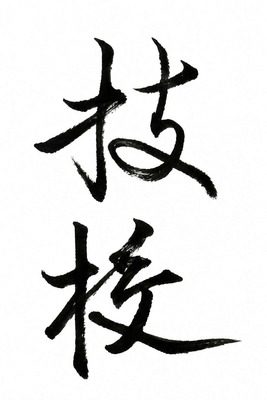
Not the junior-high graduation exam—
the Sichuan provincial technical-school entrance exam.
That exam led straight to an iron rice bowl.
Get into a good technical school
and you had a shot at a state-owned factory.
There were few slots.
But many wanted in.
At the time,
there was an official.
His son wanted to get into a technical school,
but his grades fell far short.
He said I should take the exam too.
During the test
his son would sit behind me and see my answers.
Once his son got into a good technical school,
the official had ways to bring our family a little more money each month.
My father thought that was a good idea.
On exam day, his son did sit behind me.
As I wrote,
I shifted the paper to the left,
hunched my shoulder down.
I worried he couldn't see—
couldn't copy well.
I hadn't expected his eyesight to be that good.
What I wrote, he copied exactly.
When scores came out,
there were two first places in Jianyang City.
One was me.
Another was him.
The official found my father and asked me to withdraw of my own accord.
So Jianyang's first place was only him.
He could pick any technical school in Sichuan province.
The official was delighted.
Many people came to congratulate.
Someone said that in the old days this would be called making zhuangyuan.1
His family had a zhuangyuan now.
That summer, the official took me to his home.
He had a motorcycle.
A trip that used to take me an hour on foot
took just over ten minutes on his motorcycle.
He treated me like his own son.
He dragged out a stack of rice paper2 from inside the house.
I hadn't expected he liked calligraphy too.
On them were the characters he'd practiced with the brush.
His kids hardly looked at this stuff.
I actually liked it a lot.
He gave me stacks of Speech and Eloquence3 magazines,
told me to read them,
learn a little more about dealing with people.
He said, if I learned it well, I could be an official someday too.
I really admired him then.
He knew how to talk, how to get things done.
He hardly played mahjong
but liked reading, writing, and giving speeches.
Wherever he went, he seemed to know someone.
It was also then I discovered
some families actually taught their children so many of these things.
I even thought if my parents were like him,
and could teach me those "useful things"—
how wonderful that would be.
Later,
his son went to the best technical school in Sichuan.
Our family did receive a little more money each month.
The first summer of high school,
the official invited me to his home again.
I got closer to his son.
We borrowed the Young and Dangerous films to watch.
I said, isn't this the same stuff we messed with in junior high?
He said this was different—
Ekin Cheng in it was drop-dead handsome.
I only partly agreed.
To me Jordan Chan was the handsomest—
I really loved that theme song, Generation's Giant4.
When we were out, he stood up for me too.
Later back at school,
he still wrote me letters now and then.
Mostly about him and various girls.
After he graduated,
he was assigned to a top-tier state-owned factory in Sichuan.
Not long after,
state-owned enterprises were restructured.
His factory was hit too.
Once,
he complained the pay at the factory was too low—
he should have gone into business back then.
If I hadn't helped him get into the technical school,
he might have been rich by now.
I felt blameless.
The adults decided all of it.
We were two kids with no say.
After that we mostly lost touch.
Before I went abroad,
one day in the department building I suddenly got his call.
He told me not to forget him once I made it big.
I didn't know what to say.
Off the List
I've forgotten which came first—
the junior-high graduation exam or submitting preferences.
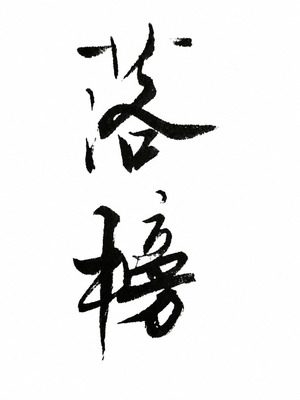
It just felt so novel at the time,
like before a video game starts—
you could pick any character you wanted.
As a child I wanted to join the army.
Later my parents said government work was steadier.
Around our parts people said,
to get into a big factory, go to technical school;
to get into a government office, go to zhong zhuan—
both were iron rice bowls.
The state assigned jobs.
I also knew of a place called university.
My cousin in the city said
only after high school could you hope to get there.
If you made it, you'd be a different person.
Fifth Aunt also said
no one in our family line had been to university yet—
if I could get in, she'd award me five hundred yuan.
That was a lot of money.
I wanted to go too.
But I kept quiet.
My parents said, high school and university were too far away.
High school would take three years.
In the towns nearby,
students with good grades all went to zhong zhuan.
My mother said she went to high school herself,
once talked of studying in Japan after graduation.
Later a recommendation for university didn't work out—
hadn't she ended up back on the farm after all?
I thought of Teacher Yuan, who taught us English in year two—
he also taught my mother many years ago.
He told me once, when my mother was young,
her grades were even better than mine.
My father said,
high school tuition wasn't cheap now,
university cost even more.
With zhong zhuan,
I could start work sooner—
eased things at home.
The teacher also said, with my grades,
I should aim for the best on the list.
Later I could land in a good government office
and if things went well, maybe even become an official in some department.
But which department, which office—
we had no idea.
No internet.
No library.
Our only source was a few pages of lists the teacher gave us.
A thin pamphlet,
listing many school names.
Behind each name was a door, a life.
They wanted to pick a decent one for me.
Two names were said to be excellent:
"Tax School" and "Technical Supervision School."
My parents said, after graduation
I'd be just collecting money or bossing people—
a comfortable job.
So they wrote those two on my form.
The day the junior-high graduation exam results came out, I was on edge.
The scores were posted on the school gate.
I ranked first.
Among the few towns I knew of, my score was the highest,
dozens of points above second place.
But I didn't get in.
We learned later
the two schools I applied to
had only one or two spots in Sichuan,
and those were internal slots.
My parents weren't employees in the system—
slots like that were never going to be for me.
Everyone thought it was over.
I still thought maybe I could go to high school.
But waiting for the zhong zhuan admission notice
made me miss the high school enrollment window.
In the end, no zhong zhuan,
and high school slipped by too.
All at once,
there was no school to go to.
So some time passed.
My father said if nothing else worked
I could go to Hefeng High12—
the closest to home.
Mother added that Yunlong High was enrolling students—
her old school.
She was a top student once and still knew a few people there.
It was an ordinary high school
but every year some still got into university.
I forced a smile and said nothing.
Then word came that Jianyang High13 might still take me.
That was our city's provincial key school.
The best school we had.
But the quota was already full.
To get in, you had to pay extra—
over a thousand yuan.
For our family that was a lot of money.
We didn't have it.
The mood at home was heavy for a while.
Food sat on the table until it was cold
and still my father didn't eat.
It seemed we'd already hit a dead end.
School Gate
My father was away for several days.
Mother said he was out everywhere trying to borrow money.
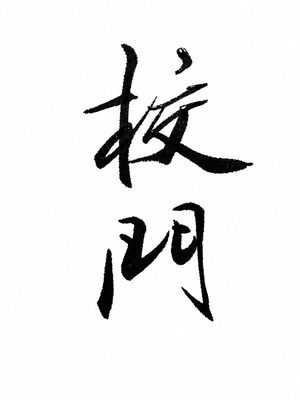
He even took the bus to distant relatives.
Borrowing money was never simple.
I told my mother,
get Dad to come back—
if it doesn't work,
I'd just go to an ordinary high school,
or go to Guangzhou to work—
that would be fine too.
Those few days felt like years.
I didn't think about anything.
I just waited and waited.
At last,
there was news.
My father had a classmate.
Her husband was then building the new school gate at Jianyang High
and managed the money on the site.
I still don't know how they worked it out.
From the funds for that gate they took out a thousand yuan.
They called it a scholarship.
That was how I got into Jianyang High.
Until then I had never heard of anything called a scholarship.
After I enrolled,
I also learned I was actually second in the whole city,
first in my class.
But back then, I crossed that threshold as a "failed applicant,"
paying an extra fee to step through that door.
Back where I'm from, people say:
getting into Jianyang High School,
meant you'd already got one foot in university.
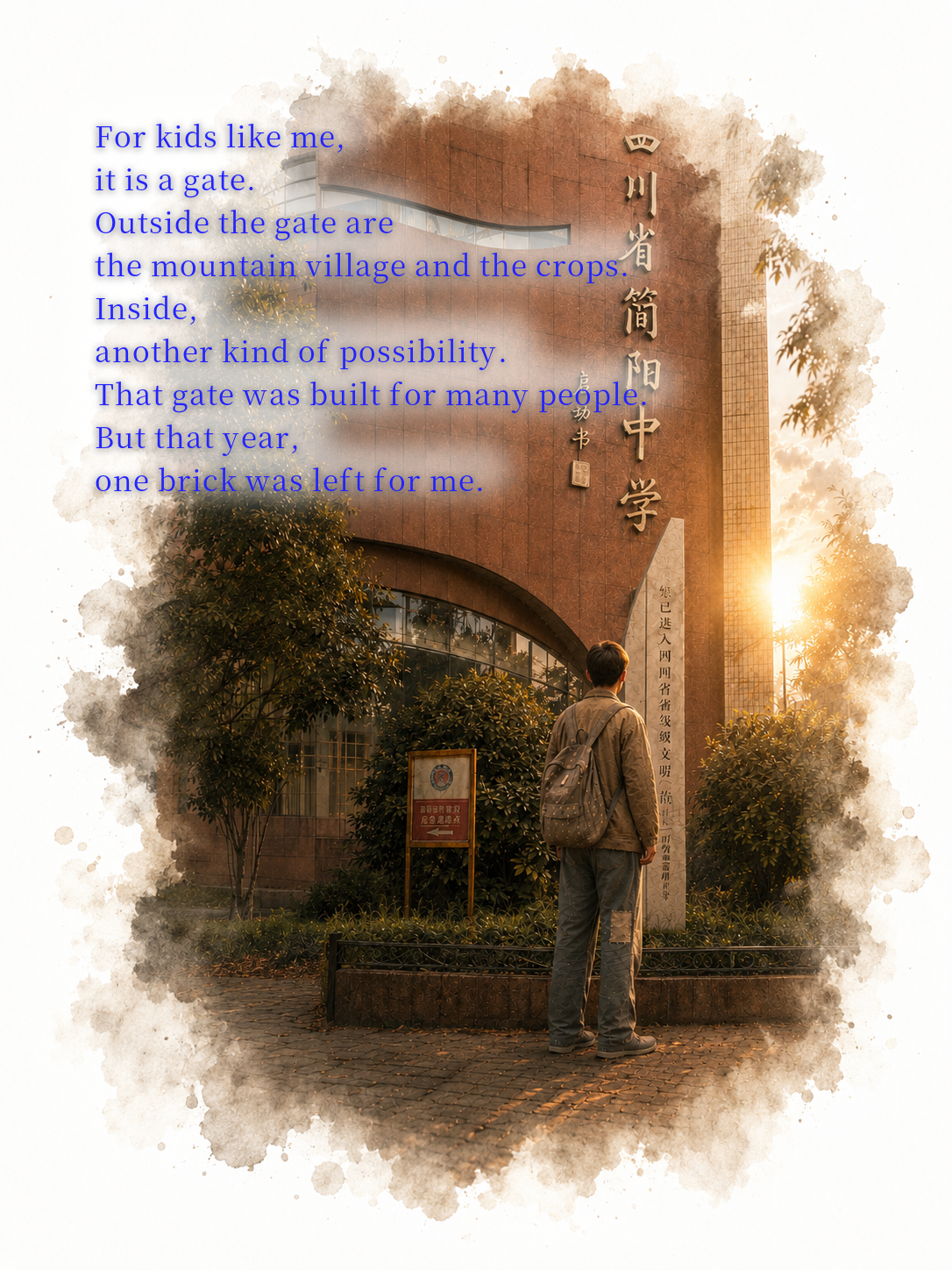
For kids like me it is a gate.
Outside the gate are the mountain village and the crops.
Inside, another kind of possibility.
Later I often passed through that school gate.
On the gate the school name was Qi Gong's15 calligraphy.
Inside, the motto was Li Peng's16.
But every time I passed there,
I thought of that thousand yuan.
That gate was built for many people.
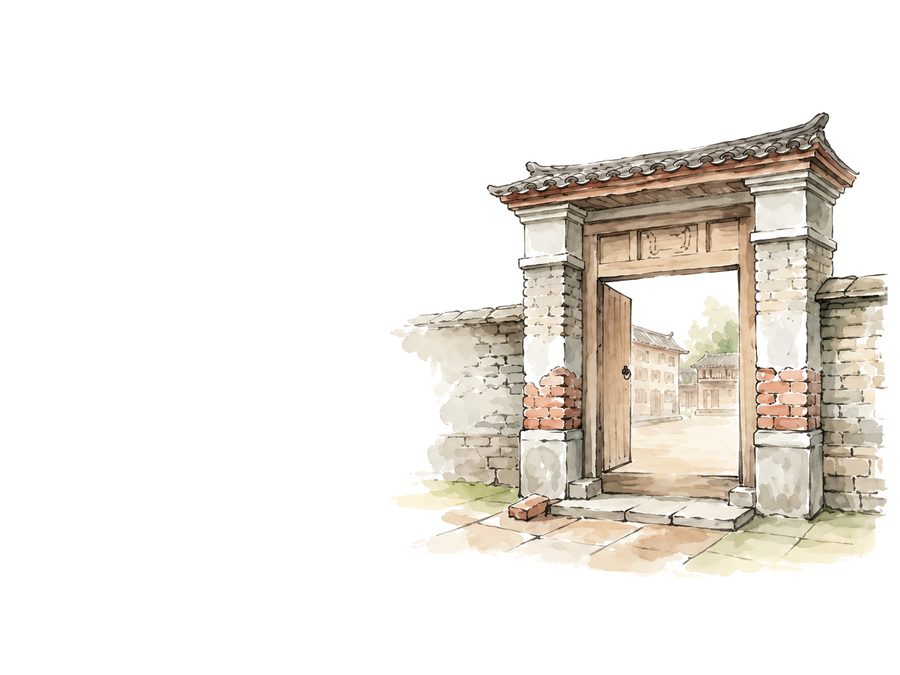
But that year,
one brick
was left for me.
-
zhuangyuan (状元): literally "top of the list"; historically the highest rank in the imperial civil-service examinations. In modern usage it usually means the top scorer on a major exam—city-wide, provincial, or national gaokao (高考, college entrance exam)—or, by extension, first in one's cohort or school. ↩
-
Rice paper here means xuan paper (宣纸): soft Chinese calligraphy and brush-painting paper—often called "rice paper" in the West, though it is not made from rice. ↩
-
Speech and Eloquence (《演讲与口才》; Yanjiang yu Koucai): a popular national magazine on speaking and social skills; founded in 1983 by Shao Shouyi, under Jilin Normal College. Widely read in the 1980s–90s. ↩
-
Young and Dangerous (《古惑仔》), a Hong Kong gang-youth film series (1990s). Ekin Cheng played Chan Ho Nam; Jordan Chan played "Chicken"—teen idols on the mainland. Generation's Giant (《乱世巨星》; Luan Shi Ju Xing) was the theme song of Young and Dangerous 4, sung by Jordan Chan. ↩
-
Capcom's 1992 arcade beat-'em-up Tunshi Tiandi II (《吞食天地Ⅱ》; Warriors of Fate); Asian cabinets were often titled San Guo Zhi II, and game halls just called it San Guo Zhi (《三国志》). Characters from Romance of the Three Kingdoms—not Chen Shou's Records of the Three Kingdoms. ↩
-
Romance of the Three Kingdoms (《三国演义》): traditionally ascribed to Luo Guanzhong (late Yuan–early Ming); long historical novel from lore and history; one of the Four Great Classical Novels. ↩
-
Zhu Ziqing (朱自清, 1898—1948), essayist, poet, scholar; Spring (《春》, 1930s), often taught in junior high—spring's return, life stirring, hope. ↩
-
Black Cat Detective (《黑猫警长》; Hei Mao Jing Zhang): a 1980s Shanghai Animation Film Studio series about a police-cat hero fighting crime—a staple of children's television in that era. ↩
-
Pang Zhonghua (庞中华, b. 1945); his pen-calligraphy copybooks were hugely influential in the 1980s–90s. ↩
-
Fangsong (仿宋体): print typeface derived from Song woodblock carving; modern standardized form—fine horizontals, heavy verticals—used in formal documents and book typography. ↩
-
Hong Kong's "Four Heavenly Kings" (四大天王)—1990s label for Andy Lau, Jacky Cheung, Aaron Kwok, and Leon Lai. ↩
-
Local high schools in Jianyang. Hefeng High (禾丰高中): public complete secondary in Hefeng Town; often dated to the late 1930s. Yunlong High (云龙高中): in Yunlong Town; became a vocational high school around 2000. ↩
-
Jianyang High (简阳中学; formally Jianyang Secondary School, Sichuan Jianyang Secondary School): public complete secondary school in Jianyang—junior high and high school divisions; from late-Qing Tongcai Academy (通材书院), founded 1899; provincial key school since 1982, later a provincial tier-one model school; Jianyang's flagship academic school. ↩
-
Tuqiao Town (土桥镇): southeastern Jintang County; borders Wuhe Township and Jinma Town, Jianyang. ↩
-
Qi Gong (启功, 1912—2005), calligrapher and scholar, was known especially for his semi-cursive script (xingkai, 行楷). ↩
-
Li Peng (李鹏, 1928—2019); Premier of the State Council of the People's Republic of China. ↩